
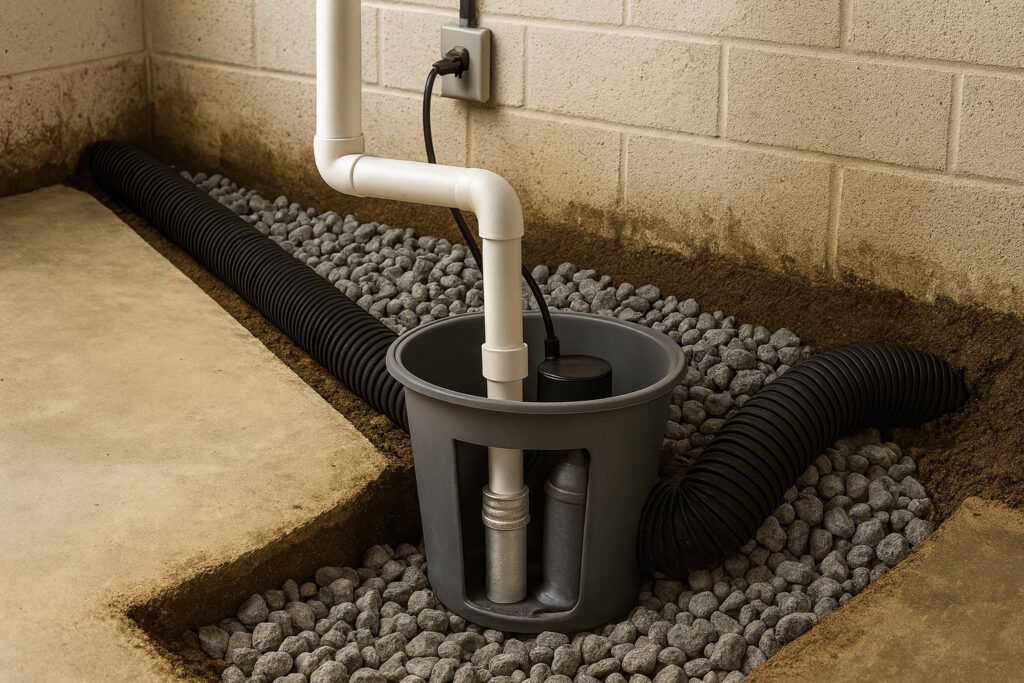
Heavy spring rains and storms are when sump pumps earn their keep, and when a pump that quietly failed over the winter becomes a flooded basement. Here's a quick check you can do yourself.
The five-minute check
- Make sure the pump is plugged in and the outlet works. If it's on a GFCI outlet, check that it hasn't tripped.
- Slowly pour a bucket of water into the pit. The float should rise and the pump should turn on.
- Watch the pump empty the pit and shut off on its own.
- Go outside and confirm water is coming out of the discharge pipe, and that it's directed away from the house.
- Clear any dirt, gravel or debris from the bottom of the pit.
Warning signs
- The pump hums but doesn't move water
- It runs constantly, or turns on and off rapidly
- Grinding, rattling or other loud noises
- The float gets stuck against the side of the pit
- The pump is old. Many last roughly 7 to 10 years.
Extra protection
A battery backup pump keeps water moving if storms knock out the power. A check valve on the discharge line stops pumped water from running back into the pit. If your basement takes on water often, ask us whether a larger pump or a second pump makes sense.
Need a Hand?
Montani Mechanical Group's licensed plumbers serve homes and businesses across Charleston, WV. Related services: